Weight Loss Peptides: What the Research Actually Shows (RT Explained)
Searching for "weight loss peptide"? Here is what the research literature actually reports about RT — a GLP-1, GIP and glucagon triple-agonist studied in laboratory models — and how to verify purity before any laboratory evaluation.
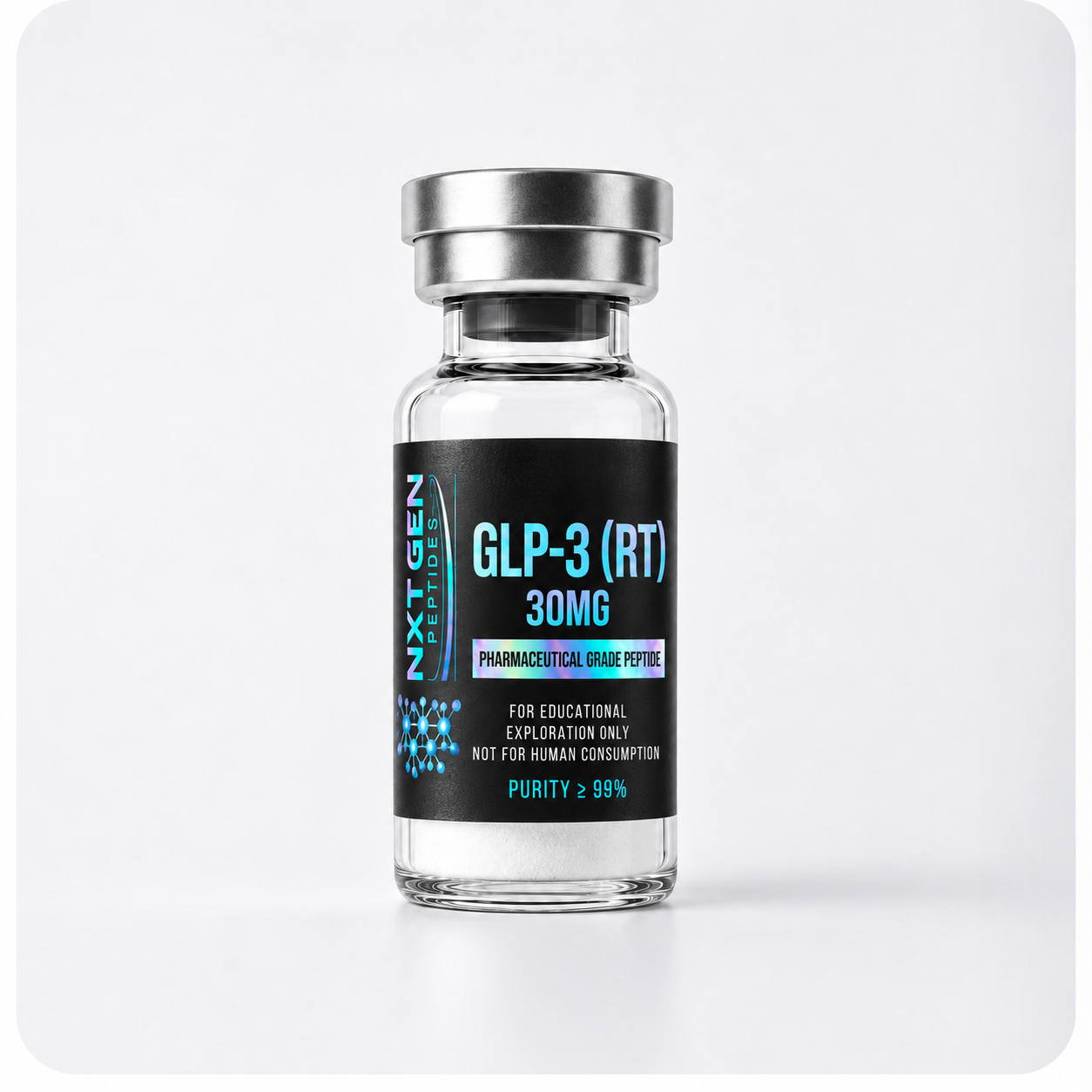
RT is one of the most frequently searched compounds in metabolic research, and most searches use everyday language — "weight loss peptide" — rather than receptor pharmacology. This guide answers that search honestly: it summarises what published research reports about RT in laboratory and preclinical models, what the data does not show, and how to verify the purity of any lot before it reaches a bench.
One point up front, because it governs everything below: every compound on this site, including RT, is supplied strictly for research and laboratory evaluation. It is not a medicine, not a supplement, and not for human consumption.
What is RT?
RT is a synthetic peptide designed to act on three receptors at once: the glucagon-like peptide-1 (GLP-1) receptor, the glucose-dependent insulinotropic polypeptide (GIP) receptor, and the glucagon receptor. Research interest in triple agonism comes from the possibility of engaging several metabolic signalling pathways through a single molecule rather than one.
What the Research Reports
GLP-1 Receptor Activity
In laboratory and animal models, GLP-1 receptor agonism has been associated with reduced energy intake, delayed gastric emptying and altered glycaemic markers. Research suggests these effects are mediated through well-characterised incretin signalling.
GIP Receptor Activity
GIP is studied alongside GLP-1 for its role in insulin secretion in response to nutrient intake. Studies indicate that combined GLP-1 and GIP agonism produces effects that differ from either receptor targeted alone, which is one reason dual- and triple-agonist compounds attract research attention.
Glucagon Receptor Activity
Glucagon receptor agonism is researched for its role in lipolysis and energy expenditure. Preclinical data indicates that adding glucagon activity to incretin signalling changes the metabolic profile measured in animal models — the basis for studying triple agonists rather than single-receptor compounds.
What the Research Does Not Show
It is important to be precise. Research on these pathways has been conducted in cell culture, tissue preparations and animal models. Findings from those settings do not establish safety or effectiveness in humans, and no such claim is made here. RT is sold as a laboratory reference compound only — it must not be administered to humans or animals.
Why Purity Matters for Triple Agonists
Triple-agonist peptides are structurally complex, and even minor impurities or sequence truncations can shift receptor selectivity — which is why chromatographic and mass-spectrometric verification is essential for credible research. Every NXT GEN Peptides RT lot is HPLC and MS tested, with purity confirmed at 99% or higher — and up to 99.9% depending on the compound — and a Certificate of Analysis accompanies each batch.
A triple-agonist peptide is only as reliable as the analytical data behind it. No COA, no credibility.
How to Verify a RT Batch
- Check the HPLC chromatogram for a single dominant peak with minimal side fractions.
- Confirm mass-spectrometry data matches the expected molecular weight of RT.
- Verify the reported purity is high — 99% or above, and up to 99.9% on the best lots.
- Cross-reference the batch number against the supplied Certificate of Analysis.
You can review a sample COA structure in our lab certificate lookup, and explore the RT product page for current batch details.
For research purposes only. Not for human use or consumption.
Frequently Asked Questions
Are weight loss peptides legal to buy for research?
Peptides sold for laboratory research are supplied for in-vitro and preclinical work only. They are not medicines or supplements and must not be used by humans or animals. Always check that a supplier provides batch-level analytical documentation.
What makes RT different from other GLP-1 peptides?
RT is studied as a triple agonist acting on GLP-1, GIP and glucagon receptors, whereas most GLP-1 peptides act on a single receptor. This broader receptor engagement is the basis for its distinct metabolic research profile.
How is RT purity verified?
Each lot is tested using high-performance liquid chromatography (HPLC) and mass spectrometry (MS), with results documented on a Certificate of Analysis confirming high purity — 99% or higher, and up to 99.9% depending on the compound.
Is RT intended for human use?
No. RT is supplied strictly for research and laboratory evaluation purposes only and is not intended for human or animal consumption.
For research purposes only. Not for human use or consumption.